Can you drink the tap water?
Short answer
The Bangkok utility certifies its supply as safe and drinkable. What that certification cannot cover is the building you are standing in — or anywhere outside its three provinces.
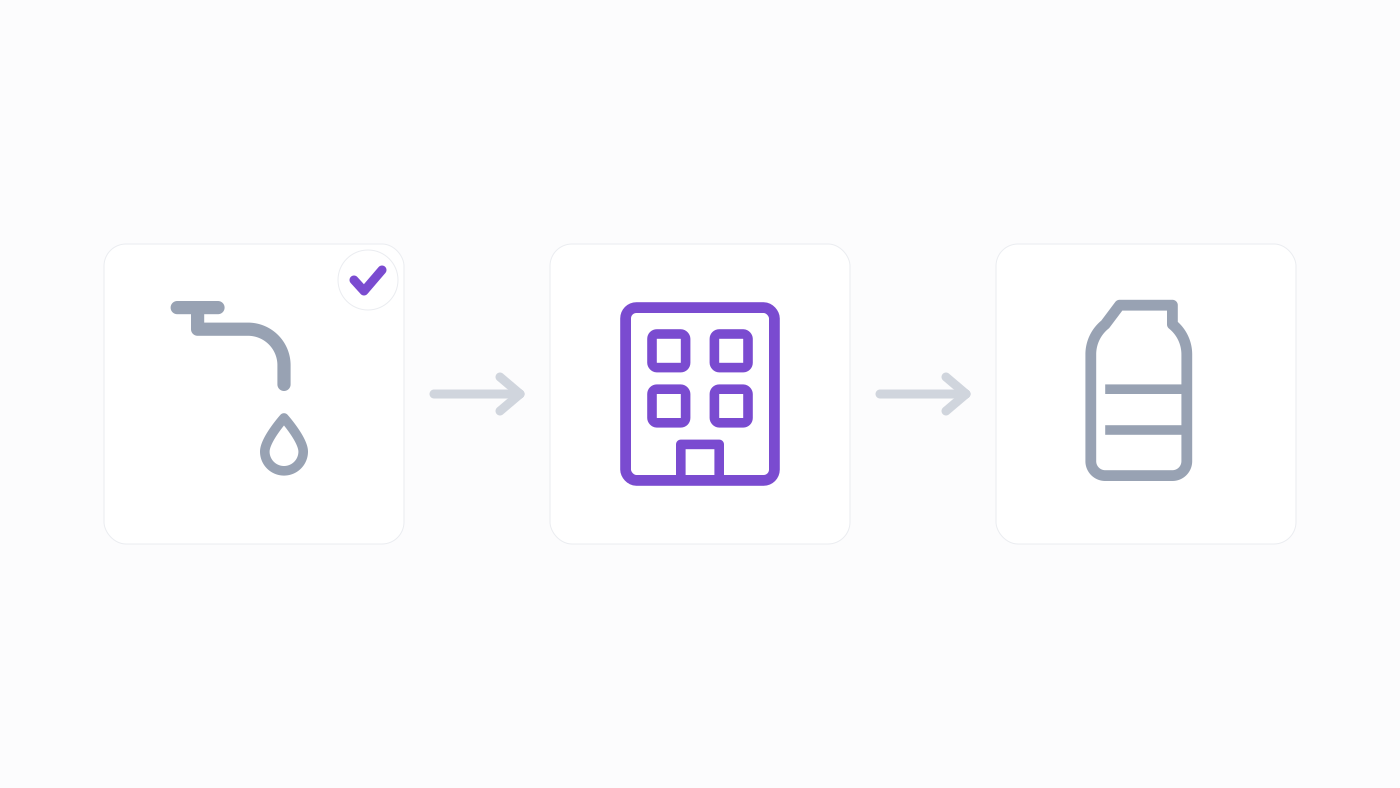
What the utility certifies
The Metropolitan Waterworks Authority's own annual report describes delivering safe, drinkable tap water meeting the Department of Health's drinking water criteria and the authority's own supply specification — across a service area of Bangkok, Nonthaburi and Samut Prakan.
The claim is not casual: raw water from the Chao Phraya and the Mae Klong runs through internationally certified treatment plants, and the authority publishes its water quality monitoring in real time.
The two gaps in that promise
First, geography. The certification belongs to one utility and its three provinces. Chiang Mai, Phuket, the islands — different suppliers, and this report says nothing about them.
Second, the last metres. A utility certifies the water it delivers to a property. The building's own storage tank and pipework sit between that point and your glass, and in an older building that stretch is the unknown. The tourism authority reaches the same conclusion from the other direction: tap water in Bangkok is technically safe to drink, it says, but the plumbing in certain buildings may make the water inadvisable to ingest.
The practical translation
In Bangkok, treat the supply as clean by the utility's own account — brushing teeth and cooking are not the worry the internet makes them. For drinking, a modern building is a reasonable bet and an aged one is your judgement call.
Ice is the question that follows, and the answer is calmer than its reputation: the tourism authority says most ice here is produced with potable water, with cube ice generally safer than crushed. What it warns about is not contamination but unfamiliarity — bacteria harmless to locals can still upset a visitor's stomach.
Outside the capital, or wherever the building looks like the weak link, bottled and boiled remain the simple answers. Notice that this is a building question more than a country question — which is not what most visitors expect it to be.
Good to know
- MWA's certification covers Bangkok, Nonthaburi and Samut Prakan only
- Building tanks and pipes are outside any utility's promise
- Most ice is made with potable water — cube ice is generally safer than crushed
- Real-time quality monitoring is published by the utility itself



 Yes, anywhere in the country — including from the drinking fountains in stations and parks.
 No. Boil it or drink bottled — the kettle in every hotel room is there for exactly this reason.
 No — the instruction from the tourism board is to stick to bottled water. Read the rest of that sentence carefully though: the caution about ice is written for rural areas, not for the whole country.
 Yes — it is safe and heavily tested. Almost nobody drinks it straight anyway, out of habit rather than doubt.
 In Taipei, yes — the city's water department certifies it directly drinkable. That certification is Taipei's own, and it does not travel with you.