Why is there a small tray next to the register?
Short answer
That is where money goes, in both directions. Put your cash and card in the tray rather than into the cashier's hand.
The tray is the transaction
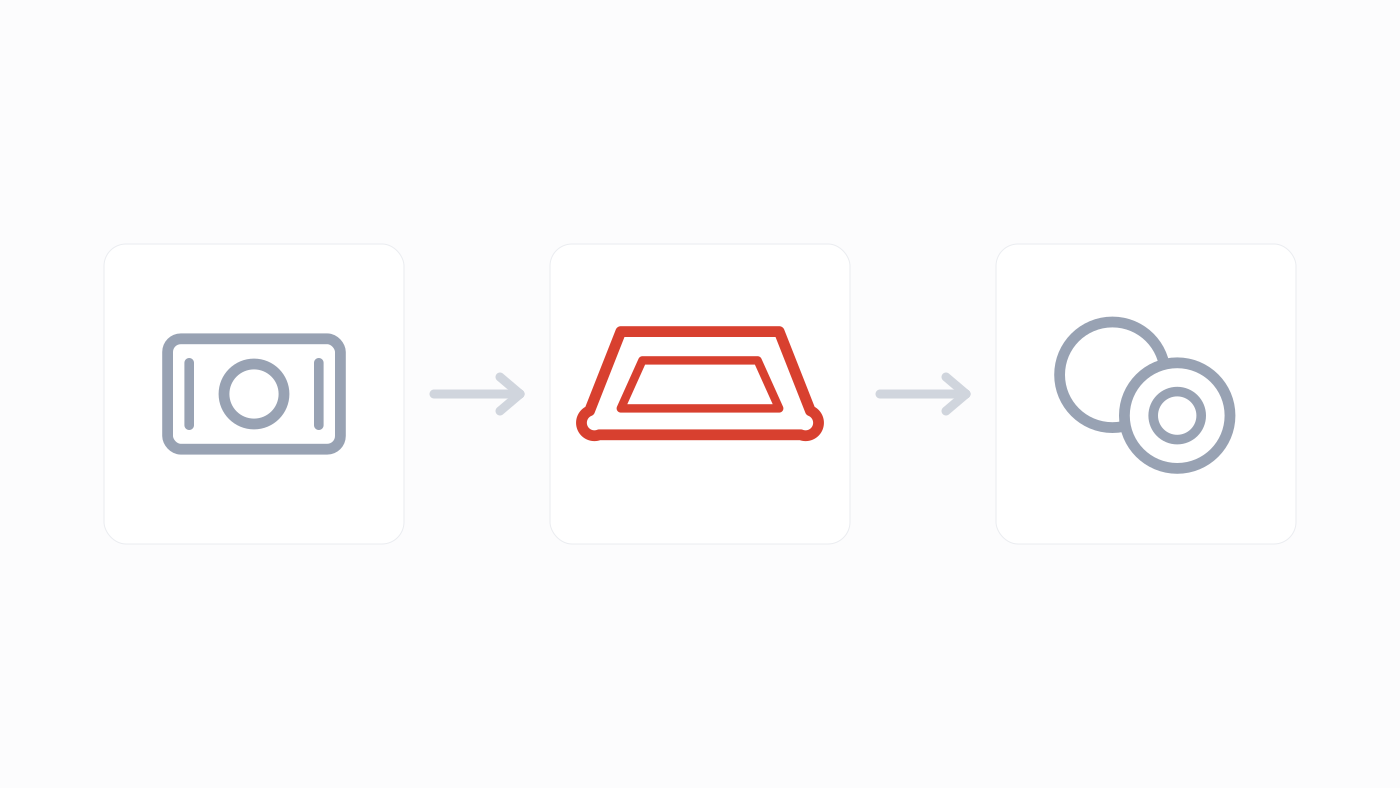
Payment is placed in the tray, and change and receipt come back the same way. Handing a note directly across the counter is not offensive, but it visibly breaks the sequence the staff are working through.
The convention exists partly because it makes the count checkable by both people, and partly because it avoids a hand-to-hand exchange that neither party has to initiate.
What it means in practice
Watch for the tray before reaching out. It is usually a small dish of moulded plastic or leather, sometimes ridged, sitting at the edge of the counter nearest you.
Cards go in it too. So do coupons and point cards, which is why the tray sometimes comes back with more in it than you expected.
Where there is no tray
Small stalls, taxis and older shops often have none, and there a direct hand-off is normal. The rule is to use the tray where one exists rather than to look for one everywhere.
When in doubt, put the money down on the counter rather than holding it out. Nobody minds either way, and the pause is shorter.
Good to know
- Cards and coupons go in the tray too, not just cash
- The tray is also where the change is counted back to you — wait for it rather than reaching