Incheon or Gimpo — does it matter which one you land at?
Short answer
Gimpo is far closer to Seoul, but almost every long-haul flight uses Incheon, so you rarely get to choose.

Two airports with different jobs
Incheon is the long-haul gateway and handles the overwhelming majority of international traffic. Gimpo, the older airport, carries the domestic network plus a small set of short-haul regional routes.
So the choice is usually made for you by where you are flying from. It only becomes a decision on routes that both airports serve.
If you do have the choice
Gimpo is inside Seoul in a way Incheon is not. Landing there removes the longest single leg of the journey and the fare that goes with it.
Against that, Incheon has more flights, more services on arrival and a more frequent rail connection. On a longer stay the extra distance matters less than it does on a two-night trip.
Moving between them
The two are connected by the same airport railway, so a transfer is possible without going into the city first. It is not quick, and it is not something to attempt on a tight connection with checked bags.
If an itinerary lands you at one and departs from the other, treat that as a scheduled hour rather than a detail.
Good to know
- Gimpo also serves domestic flights, so it is the one you use to reach Jeju or Busan by air
- Check the airport code on your ticket — ICN and GMP are both written as "Seoul"


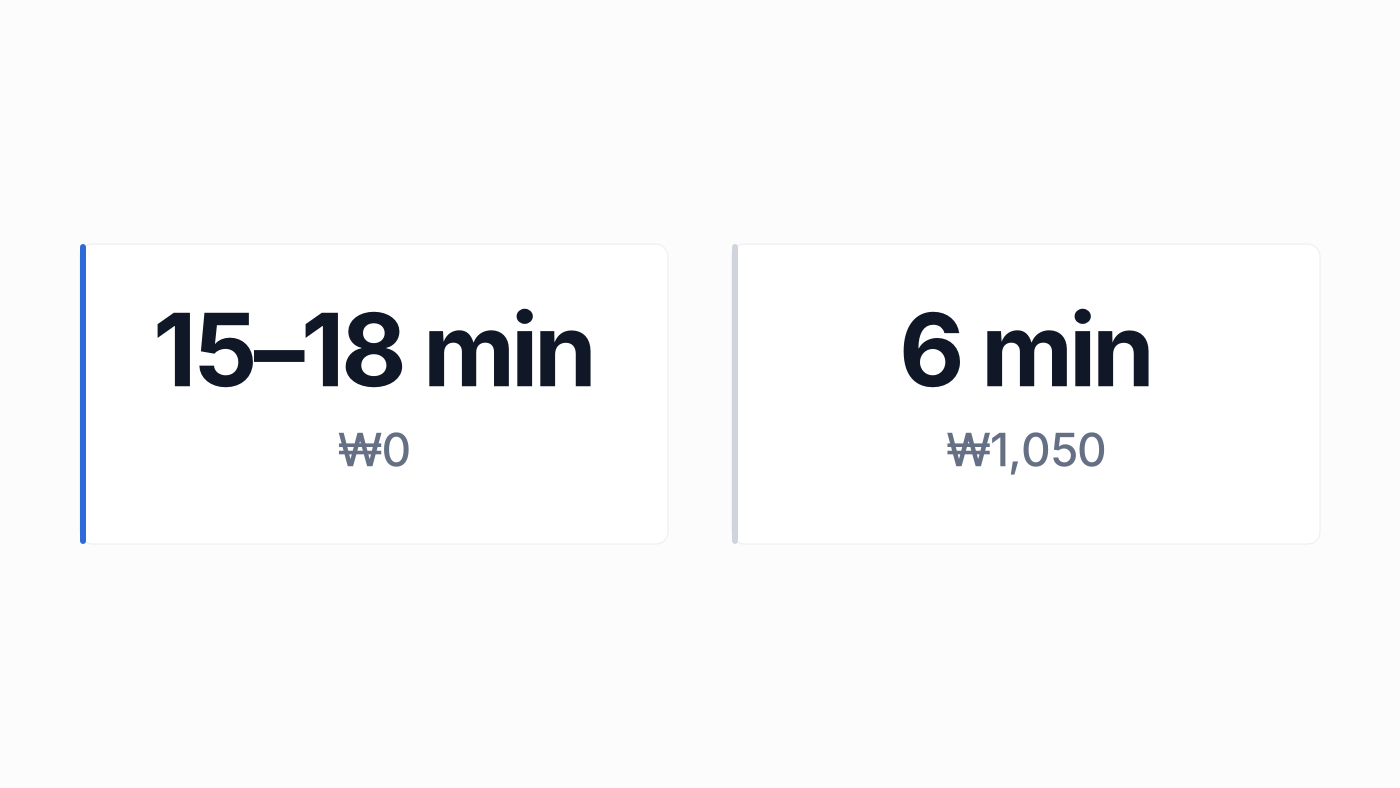
 By about an hour, yes. Haneda sits inside Tokyo; Narita is in the next prefecture.
 Yes. Capital sits inside the city in Chaoyang; Daxing is far to the south with its own separate railway. They are not interchangeable.
 Yes. Full-service airlines use Suvarnabhumi; low-cost carriers mostly use Don Mueang, 46km away with no rail link of its own.
 More here than almost anywhere. The three international gateways are not alternatives to one another — they are the north, the centre and the south of a country the train needs 36 hours to cross.
 Yes, pleasantly. Taoyuan is the main international gateway outside the city; Songshan sits inside Taipei itself and handles domestic plus a handful of regional routes.