Do you need cash in Vietnam?
Short answer
Yes. Hotels and malls take cards, but street food, markets and short rides all run on cash — and the notes are easy to confuse.

A cash country, with a lot of zeros
Most daily spending happens in cash. The denominations run large, so an ordinary lunch involves numbers that look alarming until you have recalibrated once.
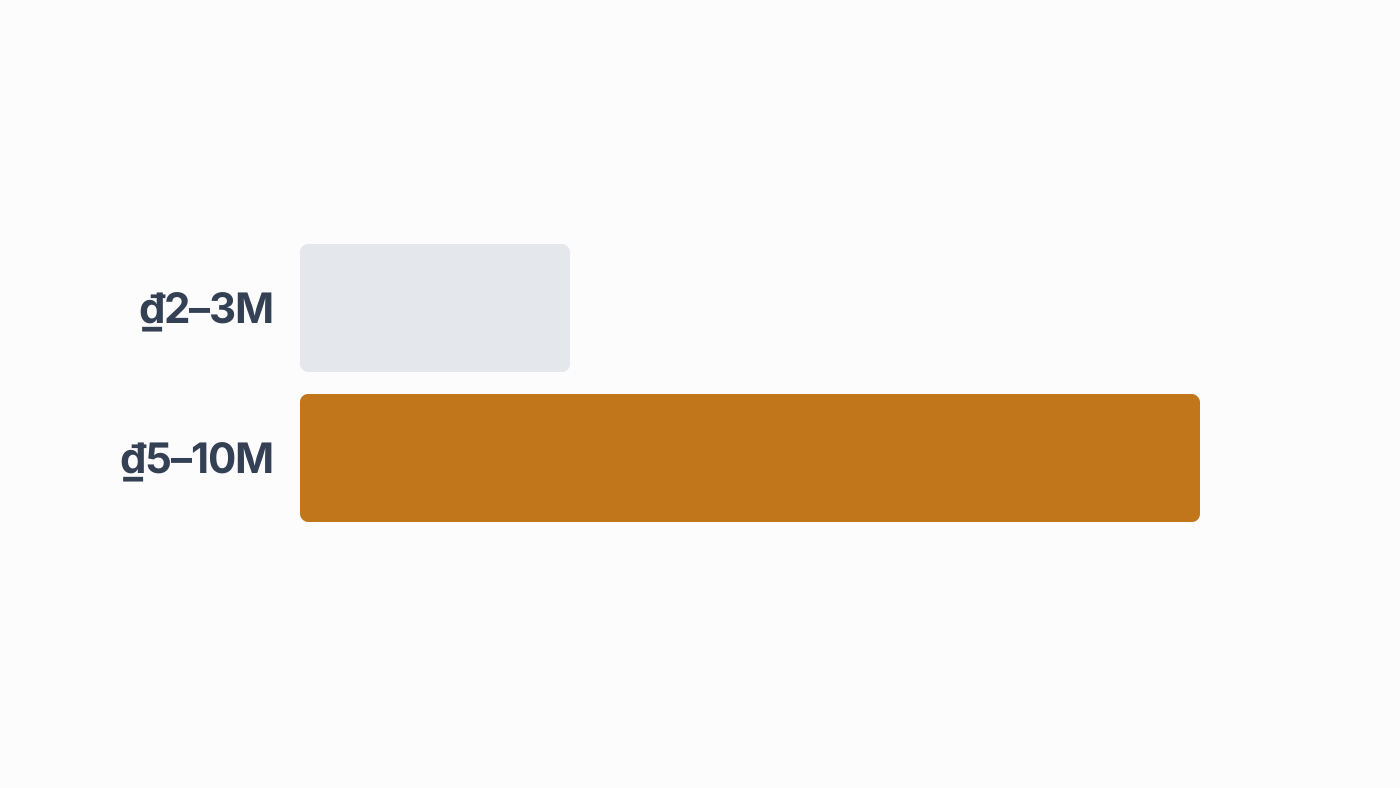
The practical hazard is not the size of the numbers but the similarity of the notes. Several denominations share close colours and the same polymer feel, and the difference between two of them is a factor of twenty-five. Count in daylight before you hand anything over.
Where cards work
Hotels, malls, chain supermarkets, airlines and mid-range restaurants in the big cities take foreign cards without difficulty.
Outside that band, assume cash. Small guesthouses, family restaurants, markets, motorbike taxis and most transport are cash transactions.
Getting and handling cash
ATMs are widespread and accept foreign cards, with a fee per withdrawal and a per-transaction ceiling that varies by bank. Machines attached to bank branches are the ones to prefer.
Break large notes at supermarkets or hotels rather than at a street stall. Small vendors genuinely may not have change, and the problem then becomes yours to solve.
Good to know
- Two of the notes differ by a factor of twenty-five and look alike — check before handing one over
- Keep small notes separate from large ones in your wallet; sorting at the stall is where mistakes happen

 Cards will carry almost the whole trip, but cash has not gone away — the Federal Reserve's own survey still counts it in roughly one payment in seven, and four in five people used it in the past month.
 Yes. Cards work in cities, but small restaurants, shrines, and rural transport are cash only.
 Rarely — but a card on its own is not the answer either. Almost everything runs through payment apps, and a foreign card has to be linked to one of them first.
 Some. Malls and hotels take cards, but stalls, markets and shared vans want cash — and locals mostly pay each other by QR.
 Rarely. Cards and phone payments work almost everywhere, including buses and street stalls.
 Some. Convenience stores and chains take cards, but night markets and small kitchens run on cash — and on the transit card.