Do I need to buy a ticket for every ride?
Short answer
No. A QR code in a payment app covers every line, and contactless bank cards work at the gates too.
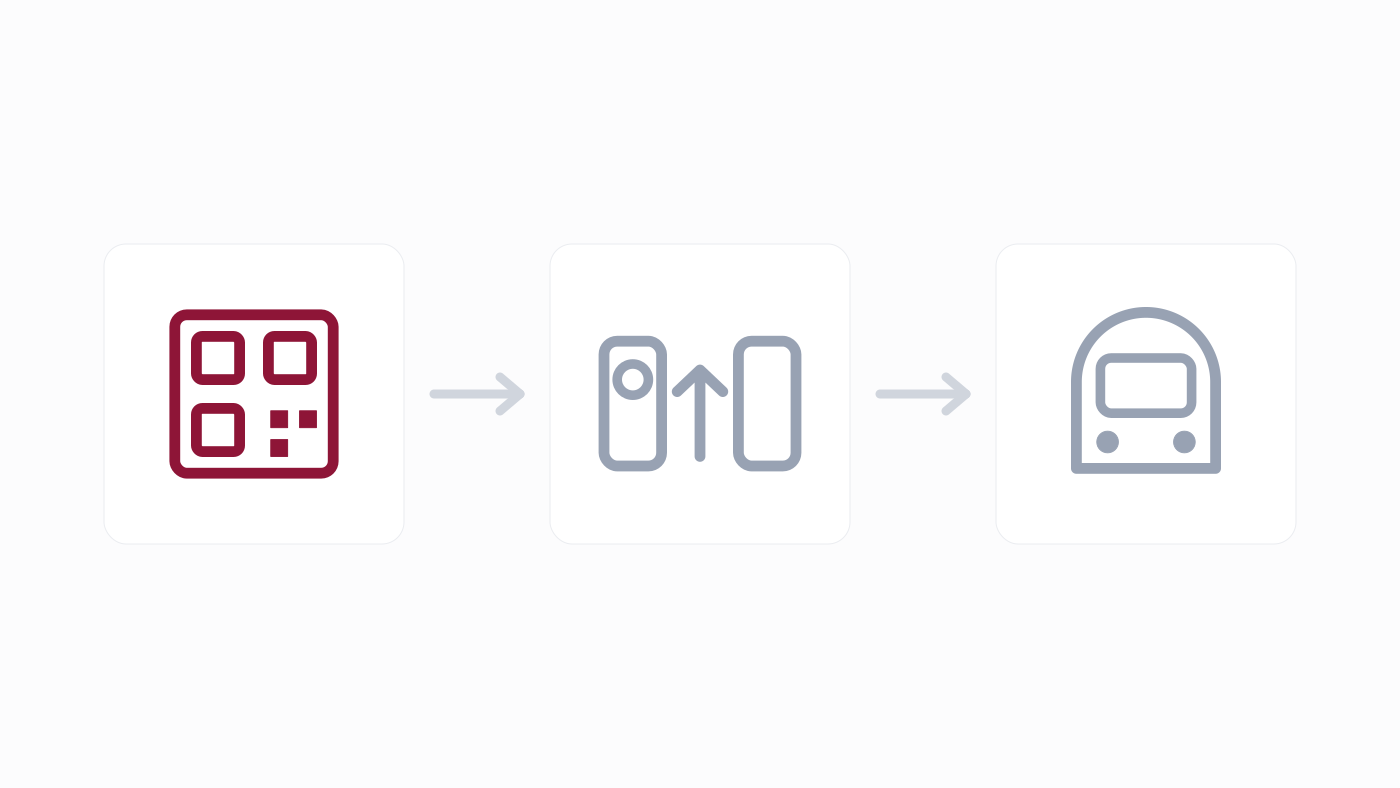
Four ways in
There is a card made for visitors — the Beijing Pass, a multi-function smart card sold at the airport terminals. There is a metro QR code generated inside Alipay, under "Travel". There are vending machines with an English button that take WeChat, Alipay, a credit card or cash. And there are staffed counters where you say your destination and pay.
So the answer to "do I need a ticket each time" depends on which of those you pick. The QR code and the contactless card are the two that stop the question arising at all.
What the QR code covers
The metro QR code and contactless payment work across all 27 subway lines plus the two airport lines. That is the whole network rather than a subset, so one setup lasts the trip.
On the card side, UnionPay QuickPass, Mastercard and Visa are all accepted, domestic and international. If you already tap a card onto readers at home, the same reflex works here.
Why you tap out as well
Fares are distance-based. There is a starting price for journeys within six kilometres, then steps at 12, 22 and 32 kilometres, and beyond that a further increment every 20 kilometres with no upper cap. The system cannot price your trip until it knows where you left.
The Capital Airport Express is the exception, charged as a fixed fare on its own standard. Everywhere else, treat the exit tap as part of the journey rather than an afterthought.
Good to know
- The Alipay metro QR code covers all 27 lines plus both airport lines
- Fares are distance-based, so you tap out as well as in
- The Capital Airport Express is a flat fare, unlike the rest of the network



 With the contactless card or phone already in your hand, in the larger systems — there is no national transit card because every city runs its own. New York reads your own bank card at the gate and stops charging once you have ridden enough in a week.
 No. One rechargeable IC card taps you through almost every train, subway and bus in the country.
 On the BTS, a Rabbit card ends the queueing. But Bangkok's rail is two separate systems, and the underground MRT is not covered by it.
 No. One rechargeable transit card covers subway, buses and taxis, and any convenience store sells and tops one up.
 No. One EasyCard from any convenience store covers the metro, buses, trains and even the high speed rail — and pays at the shops in between.